SIR Advocate for Calcutta High Court | Increeda Law Firm
July 22, 2026 | by Increeda Law Firm
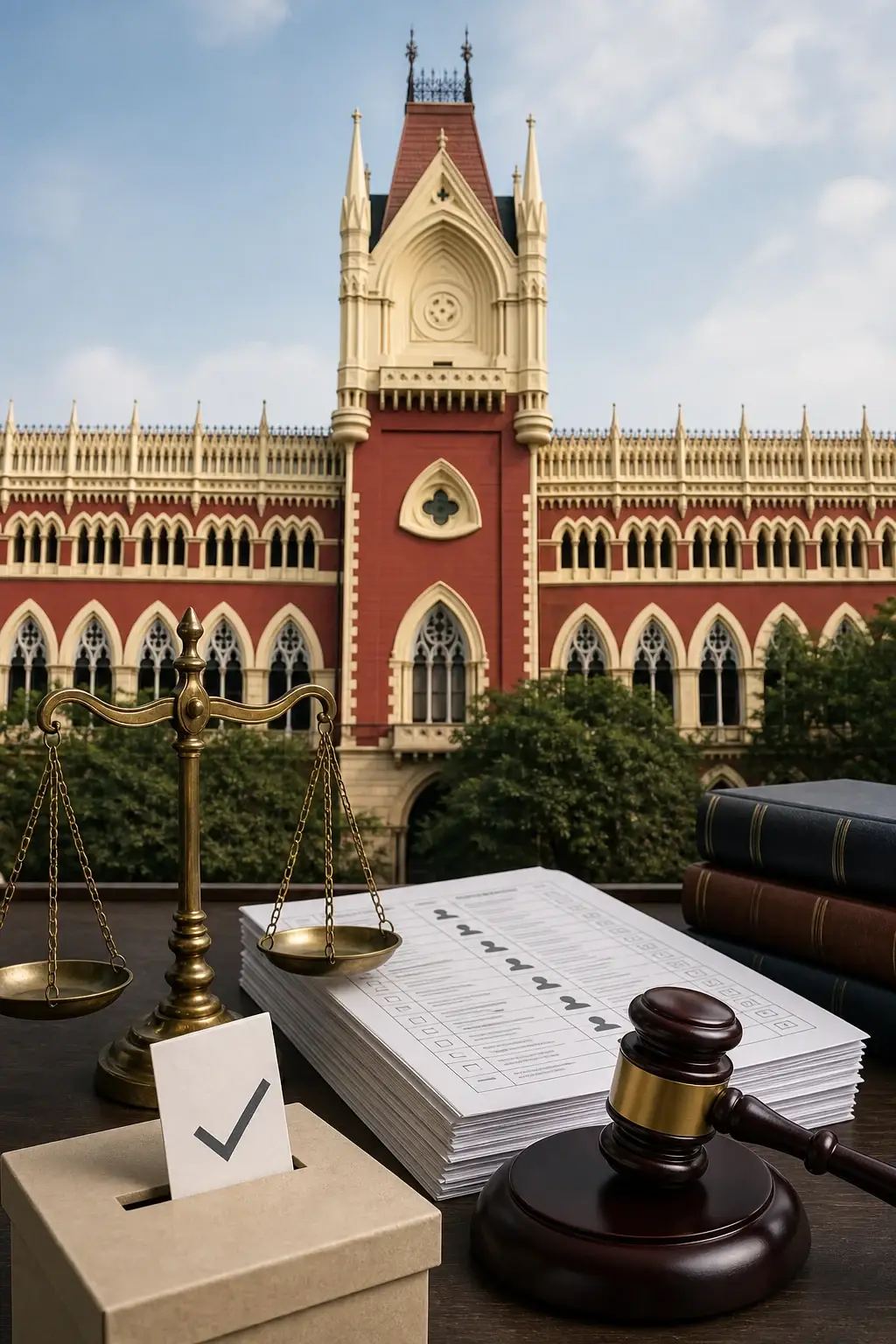
Advocate for Election and SIR Matters in Calcutta High Court
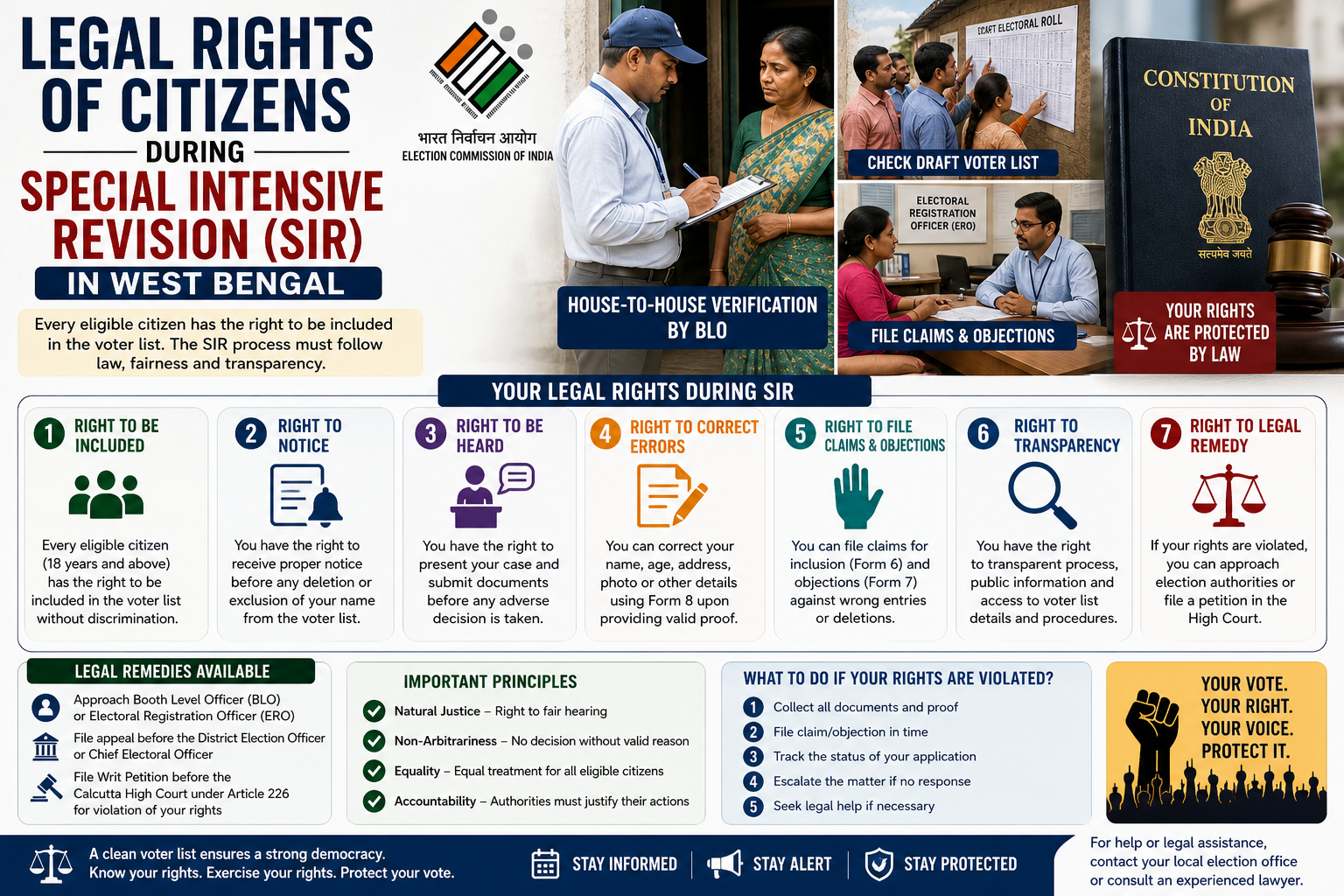
Election-related disputes require a clear understanding of electoral laws, procedural rules, documentary requirements, and court practice. If your name has been deleted, omitted, or objected to during the Special Intensive Revision (SIR) process in West Bengal, timely legal advice can help you understand the remedy available at the appropriate stage.
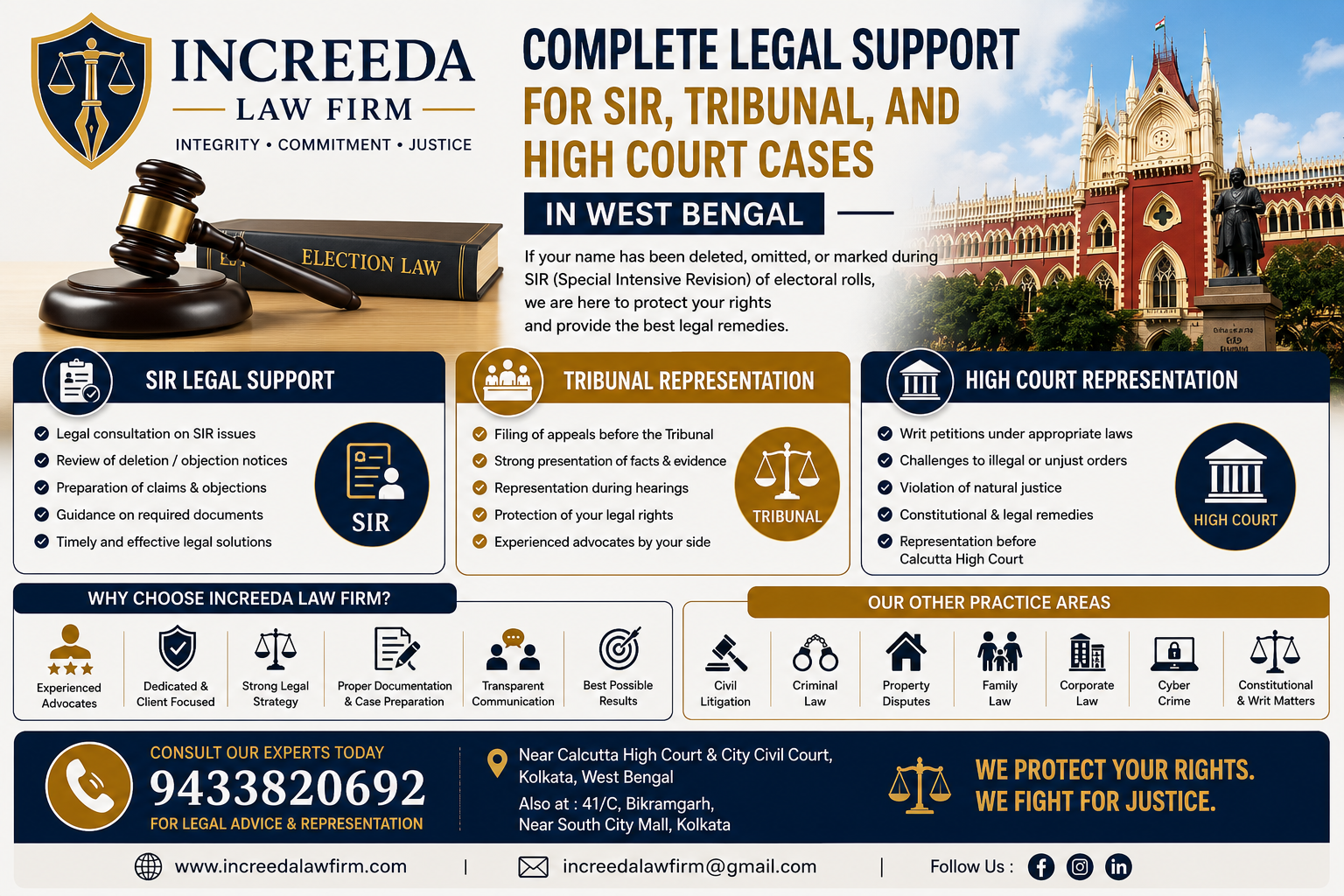
Increeda Law Firm provides legal assistance in election-related matters before electoral authorities, the designated statutory appellate authority or other appellate forum where applicable, and the Calcutta High Court, where proceedings are legally maintainable. The correct course depends on the facts, the order or notice involved, available documents, and whether an applicable statutory or appellate remedy exists and should be pursued.
For broader assistance covering SIR objections, restoration, appeals, and voter-rights issues across West Bengal, see our SIR lawyer and voter-rights services in Kolkata.
Common SIR and Voter-Deletion Scenarios
A voter-roll problem may arise from an address mismatch, duplicate-entry concern, an assumption that the voter has migrated, incomplete verification, inconsistent identity details, missing documents, or an administrative or technical error. Legal assistance may be appropriate where:
- A name has been deleted or omitted without an adequate opportunity to respond.
- An applicable claim, objection, correction, inclusion, or other application has been rejected.
- The reasons for exclusion or rejection are unclear or unsupported by the available record.
- A hearing was not provided, relevant documents were not considered, or another procedural irregularity occurred.
- Where an applicable statutory appeal or other appellate remedy exists, an adverse order has been passed and requires legal review.
- An electoral authority, statutory appellate authority, appellate forum, or court has made a favorable direction, but implementation remains outstanding.
- An approaching election creates genuine urgency, subject to the remedies and timelines available under law.
Choosing the Appropriate Form or Remedy
The appropriate application, claim, objection, or appeal depends on the reason for deletion or omission, the stage of electoral-roll revision, and any order already passed. Form 6 is used for inclusion or new registration. Other procedures may apply to correction, objection, deletion, or an appeal to the designated statutory appellate authority. The applicable form and remedy should therefore be identified from the facts and current electoral-roll procedure rather than assumed.
Assistance Before Electoral Authorities, Appellate Authorities, and the High Court
Depending on the stage and facts of the matter, our assistance may include:
- Reviewing voter-deletion notices, objection records, electoral-roll extracts, and orders.
- Advising on claims, objections, corrections, restoration applications, and documentary compliance before the appropriate electoral authority.
- Preparing representations, appeals, written submissions, affidavits, and supporting records.
- Representing clients before the designated statutory appellate authority or other appellate forum where that forum has jurisdiction over the matter.
- Reviewing an appellate order, including whether relevant evidence and procedural requirements were properly considered.
- Advising on and conducting appropriate writ proceedings before the Calcutta High Court where legally maintainable.
- Following up on the implementation of an order passed by an electoral authority, statutory appellate authority, appellate forum, or court.
Statutory Appeal or Calcutta High Court: Which Path Applies?
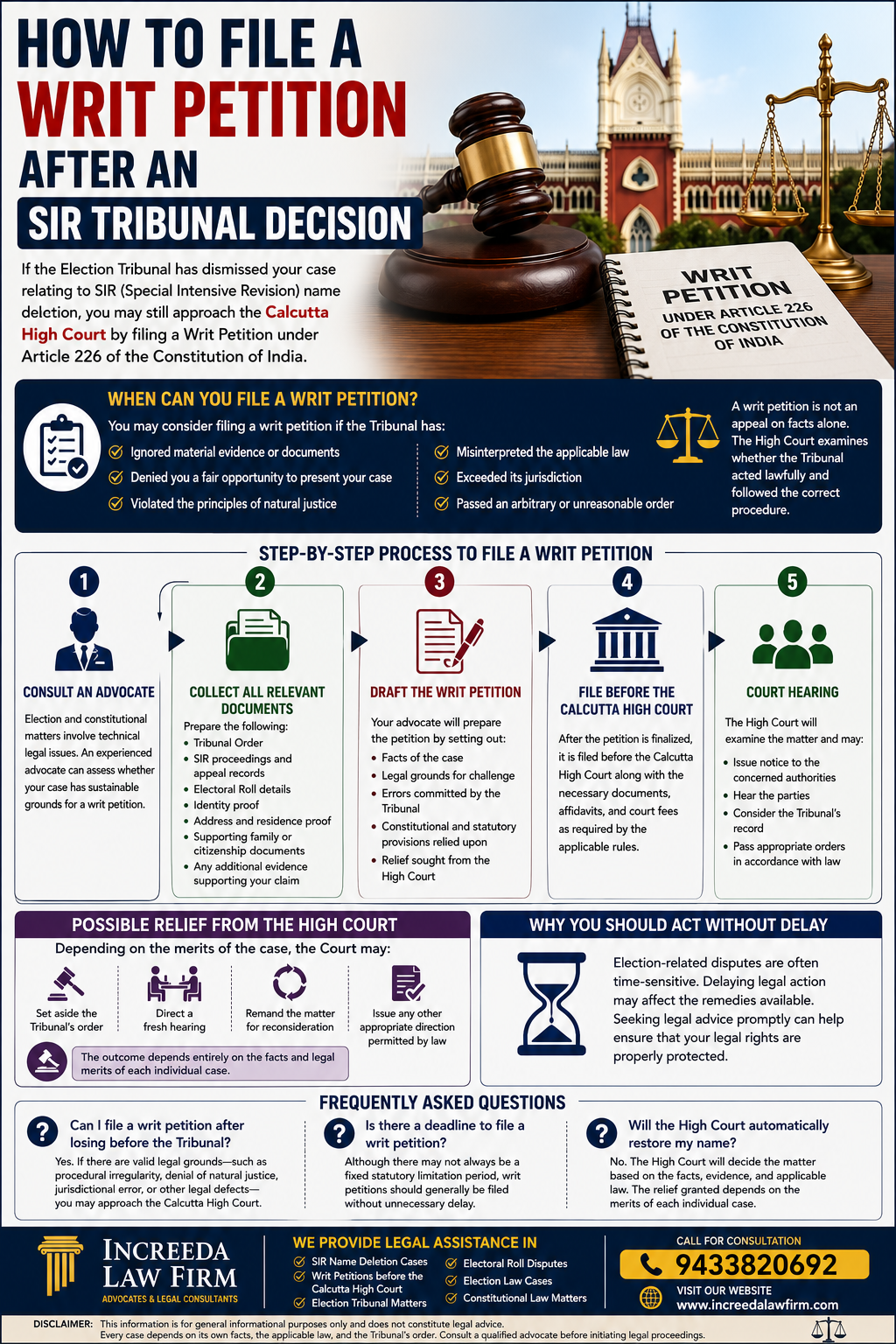
Where maintainable, constitutional remedies before the Calcutta High Court may be considered after examining the statutory remedy available, the order challenged, procedural fairness, the electoral record, and the urgency of the case. Depending on the facts and the applicable legal framework, the High Court may not be the first forum for a voter-deletion dispute. A claim, objection, statutory process, or appeal to the designated statutory appellate authority may provide an appropriate earlier remedy where such a remedy exists. The existence of an alternative remedy, the stage of the proceedings, the contents of the challenged order, urgency, and alleged procedural unfairness can all affect whether High Court proceedings are maintainable.
Depending on the facts and applicable law, High Court review may be considered after an order by the designated statutory appellate authority or other applicable appellate forum, where an applicable direction has not been implemented, or where the record indicates a material jurisdictional or procedural issue. Even then, a writ petition is not automatic: the pleadings, parties, documents, relief sought, and maintainability must be assessed individually. Read more about legal options after an adverse electoral-roll decision.
Possible High Court Remedies
Where a writ proceeding is maintainable and supported by the facts and applicable law, a party may seek appropriate directions concerning consideration or reconsideration of the matter, disposal of a pending proceeding, examination of relevant records, an opportunity of hearing, or action in accordance with an existing order. Whether any such relief is legally available must be assessed in the individual case. The precise relief depends on the case. The High Court does not provide the same remedy in every voter-roll dispute, and approaching the Court does not guarantee restoration or any particular result.
For procedural background, see our guides on filing a writ petition after an SIR appellate decision and challenging an appellate order in an SIR name-deletion matter.
Documents to Prepare
The documents required vary, but an initial review commonly benefits from the following:
- EPIC or voter ID details and relevant electoral-roll extracts.
- Aadhaar, address proof, age or citizenship-related records where relevant and lawfully required.
- Copies of the applicable inclusion, correction, objection, deletion, or appeal forms and acknowledgement.
- Any deletion, objection, verification, hearing, or rejection notice.
- ERO or other electoral-authority orders and available BLO verification records.
- Statutory appeal papers, notices, written submissions, evidence, and the appellate order.
- Any restoration, reconsideration, or implementation direction.
- Correspondence showing follow-up with the authority and any response received.
Do not assume every document in this list is required in every case. A case-specific review can identify what is relevant and whether additional certified records should be obtained. See the detailed guide to documents for SIR voter-list correction in West Bengal.
Choosing an Advocate for an SIR High Court Matter
Neutral considerations when selecting counsel include experience with writ and constitutional proceedings, familiarity with electoral and administrative processes, the ability to analyses electoral-authority and appellate records, clarity about maintainability and available remedies, careful drafting, transparent communication about scope and fees, and the capacity to respond appropriately where genuine urgency exists. Rankings or promises of success should not replace a fact-specific assessment of the matter.
Frequently Asked Questions
Can I approach the Calcutta High Court immediately after my name is deleted?
Not necessarily. An applicable claim, objection, statutory appeal, or other remedy may need to be considered first. Maintainability depends on the facts, stage of proceedings, urgency, and nature of the alleged legal or procedural error.
What if my statutory appeal has been dismissed?
The appellate order and underlying record should be reviewed before further action is considered. The legal question is not simply whether the decision was unfavorable, but whether there is a sustainable ground for review or challenge and an appropriate remedy.
What if a restoration order has not been implemented?
Keep the order, proof of service, follow-up correspondence, and current electoral-roll record. The appropriate enforcement or public-law remedy will depend on which authority passed the order and what steps have already been taken.
Can fresh documents be used after an earlier rejection?
That depends on the governing procedure, the stage of the matter, the relevance of the documents, and whether the applicable electoral authority, statutory appellate authority, appellate forum, or court is legally permitted to receive them. The documents and previous orders should be reviewed before deciding how they may properly be placed on record.
Does filing a writ petition guarantee restoration?
No. No advocate or law firm can guarantee an outcome. Relief depends on maintainability, facts, evidence, applicable law, and the Court’s assessment.
Contact Increeda Law Firm
Phone: +91 9433820692
Consultation: Contact Increeda Law Firm
Website: https://increedalawfirm.com/
Office:
Near Calcutta High Court & City Civil Court, Kolkata
Also at: 41/C, Bikramgarh, Near South City Mall, Kolkata
Disclaimer
This article is intended for general informational purposes only and does not constitute legal advice. No advocate or law firm can guarantee the outcome of any legal proceeding. The appropriate legal remedy depends on the facts, evidence, procedural history, maintainability, and applicable law in each individual case.
RELATED POSTS
View all