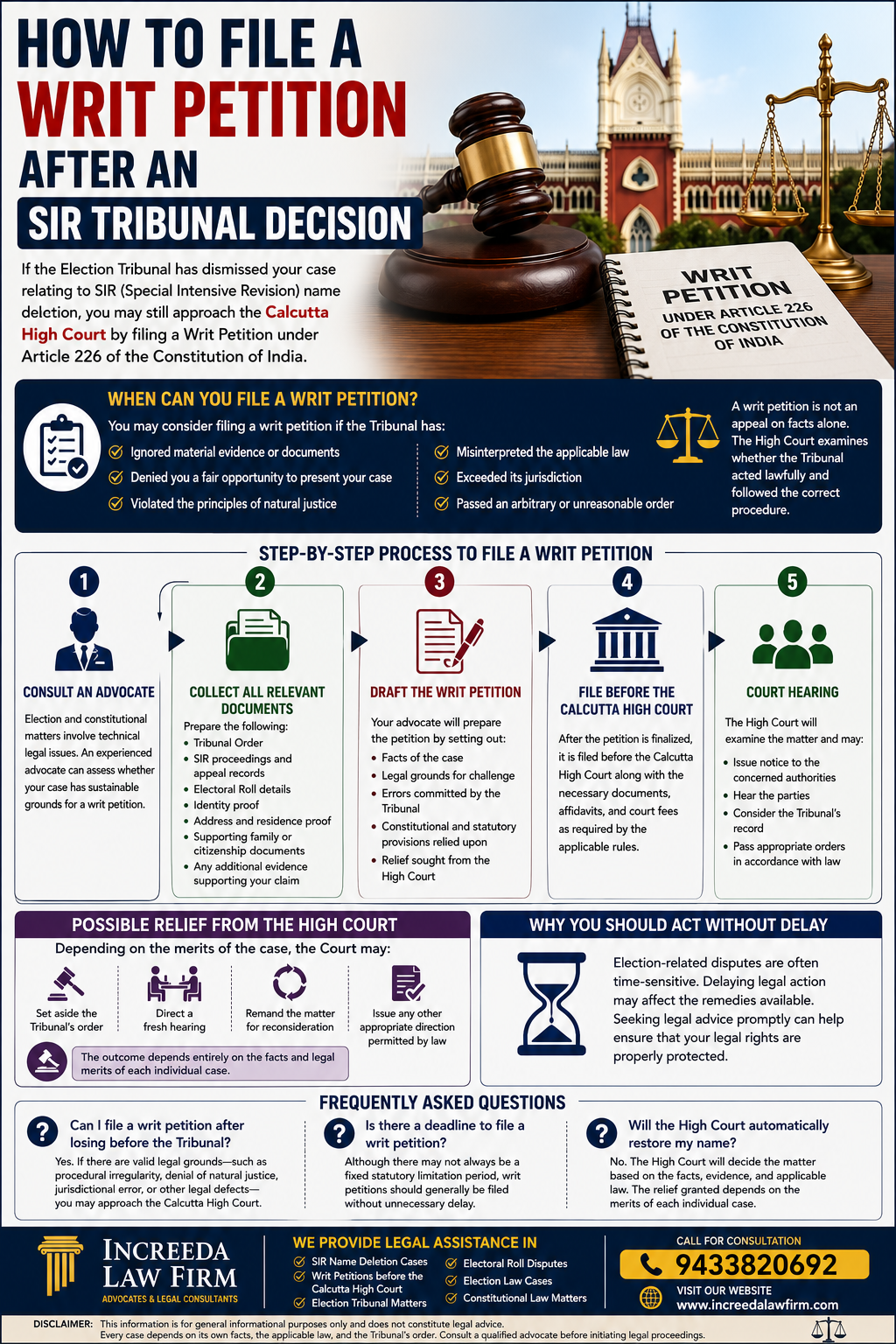
How to File a Writ Petition After an SIR Tribunal Decision
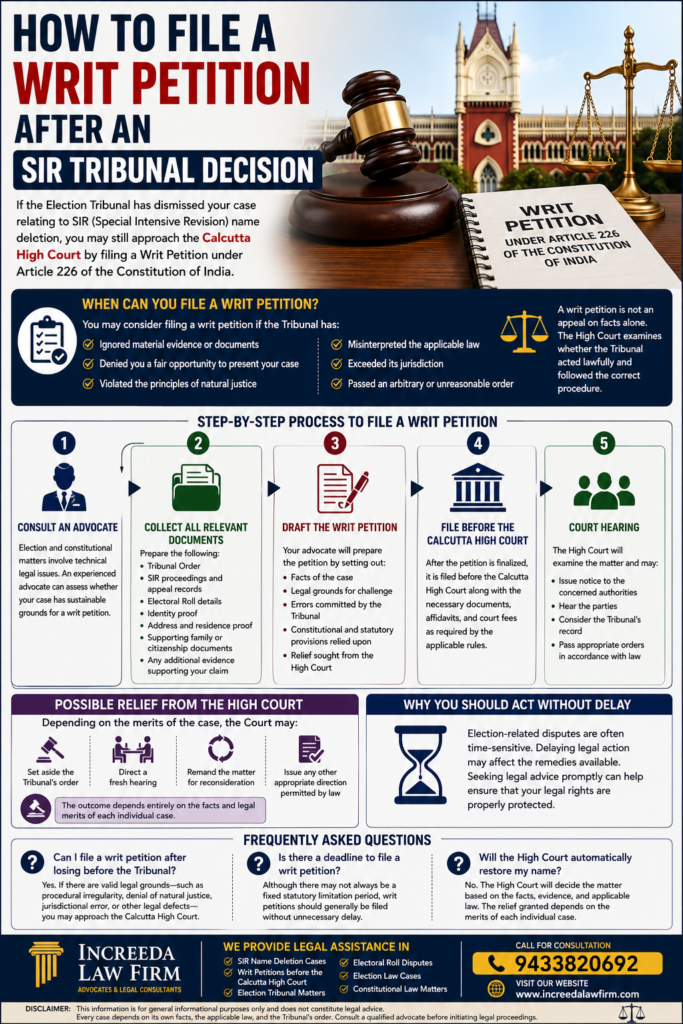
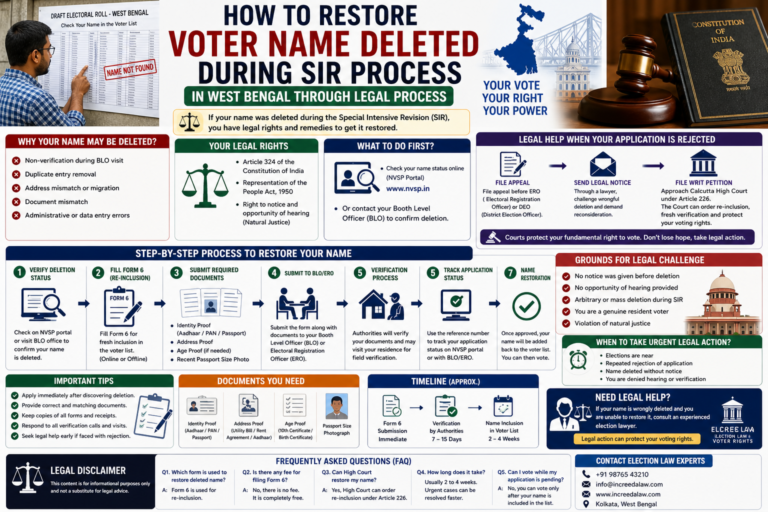
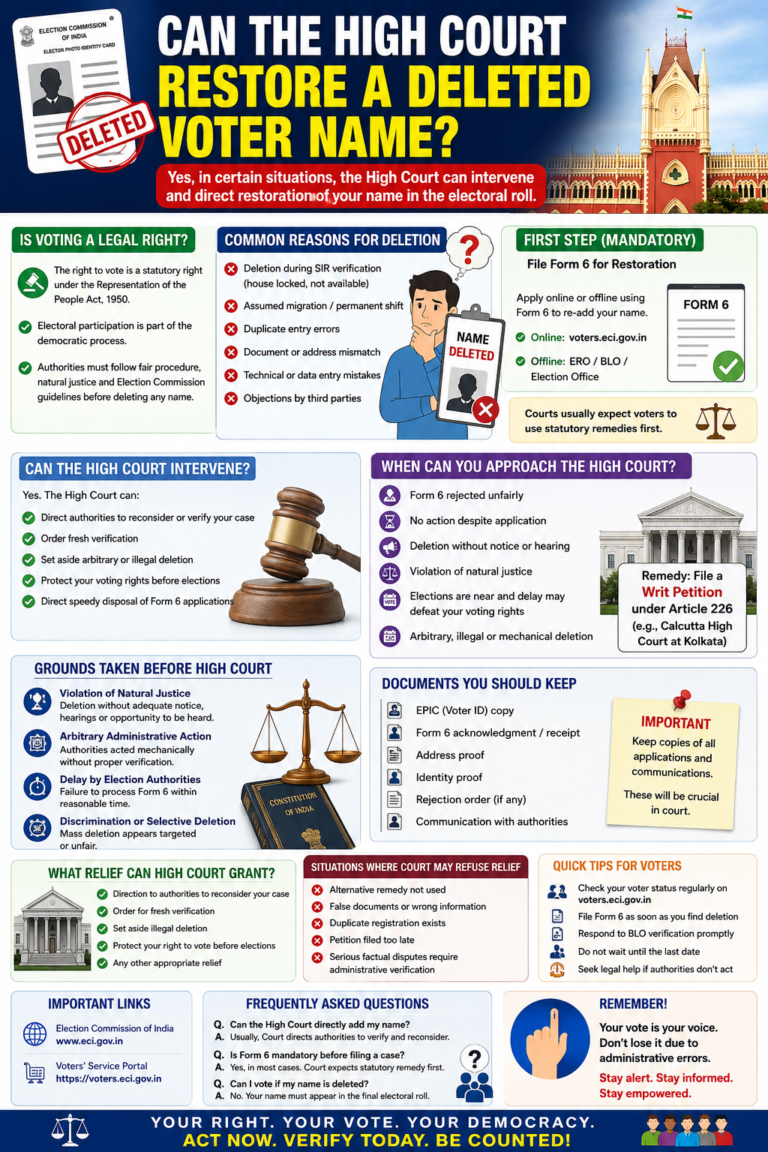
If the Election Tribunal has dismissed your case relating to SIR (Special Intensive Revision) name deletion, you may still have the option to approach the Calcutta High Court by filing a Writ Petition under Article 226 of the Constitution of India, provided there are valid legal grounds.
A writ petition is not an appeal on facts alone. The High Court generally examines whether the Tribunal acted lawfully, followed the correct procedure, and complied with the principles of natural justice.
When Can You File a Writ Petition?
You may consider filing a writ petition if the Tribunal has:
- Ignored material evidence or documents.
- Denied you a fair opportunity to present your case.
- Violated the principles of natural justice.
- Misinterpreted the applicable law.
- Exceeded its jurisdiction.
- Passed an arbitrary or unreasonable order.
Every case depends on its own facts and legal issues.
Step-by-Step Process to File a Writ Petition
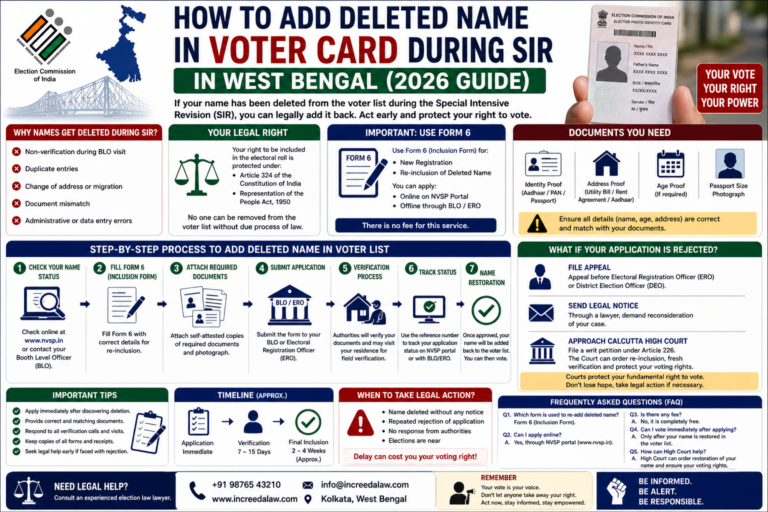
1. Consult an Advocate
Election and constitutional matters involve technical legal issues. An experienced advocate can assess whether your case has sustainable grounds for a writ petition.
2. Collect All Relevant Documents
Prepare the following:
- Tribunal Order
- SIR proceedings and appeal records
- Electoral Roll details
- Identity proof
- Address and residence proof
- Supporting family or citizenship documents (where relevant)
- Any additional evidence supporting your claim
3. Draft the Writ Petition
Your advocate will prepare the petition by setting out:
- Facts of the case
- Legal grounds for challenge
- Errors committed by the Tribunal
- Constitutional and statutory provisions relied upon
- Relief sought from the High Court
4. File Before the Calcutta High Court
After the petition is finalized, it is filed before the Calcutta High Court along with the necessary documents, affidavits, and court fees as required by the applicable rules.
5. Court Hearing
The High Court will examine the matter and may:
- Issue notice to the concerned authorities.
- Hear the parties.
- Consider the Tribunal’s record.
- Pass appropriate orders in accordance with law.
Possible Relief from the High Court
Depending on the merits of the case, the Court may:
- Set aside the Tribunal’s order.
- Direct a fresh hearing.
- Remand the matter for reconsideration.
- Issue any other appropriate direction permitted by law.
The outcome depends entirely on the facts and legal merits of each individual case.
Why You Should Act Without Delay
Election-related disputes are often time-sensitive. Delaying legal action may affect the remedies available. Seeking legal advice promptly can help ensure that your legal rights are properly protected.
Need Legal Assistance?
Increeda Law Firm provides legal representation and consultation for:
- SIR Name Deletion Cases
- Writ Petitions before the Calcutta High Court
- Election Tribunal Matters
- Electoral Roll Disputes
- Election Law Cases
- Constitutional Law Matters
📞 Call for Consultation: +91 9433820692
🌐 Website: https://increedalawfirm.com
Frequently Asked Questions
Can I file a writ petition after losing before the Tribunal?
Yes. If there are valid legal grounds—such as procedural irregularity, denial of natural justice, jurisdictional error, or other legal defects—you may approach the Calcutta High Court.
Is there a deadline to file a writ petition?
Although there may not always be a fixed statutory limitation period, writ petitions should generally be filed without unnecessary delay. Prompt legal advice is recommended.
Will the High Court automatically restore my name?
No. The High Court will decide the matter based on the facts, evidence, and applicable law. The relief granted depends on the merits of each individual case.
Disclaimer: This article is for general informational purposes only and does not constitute legal advice. Every case depends on its own facts, the applicable law, and the Tribunal’s order. Consult a qualified advocate before initiating legal proceedings.