
Legal Fees and Costs for SIR Name-Deletion Matters in West Bengal
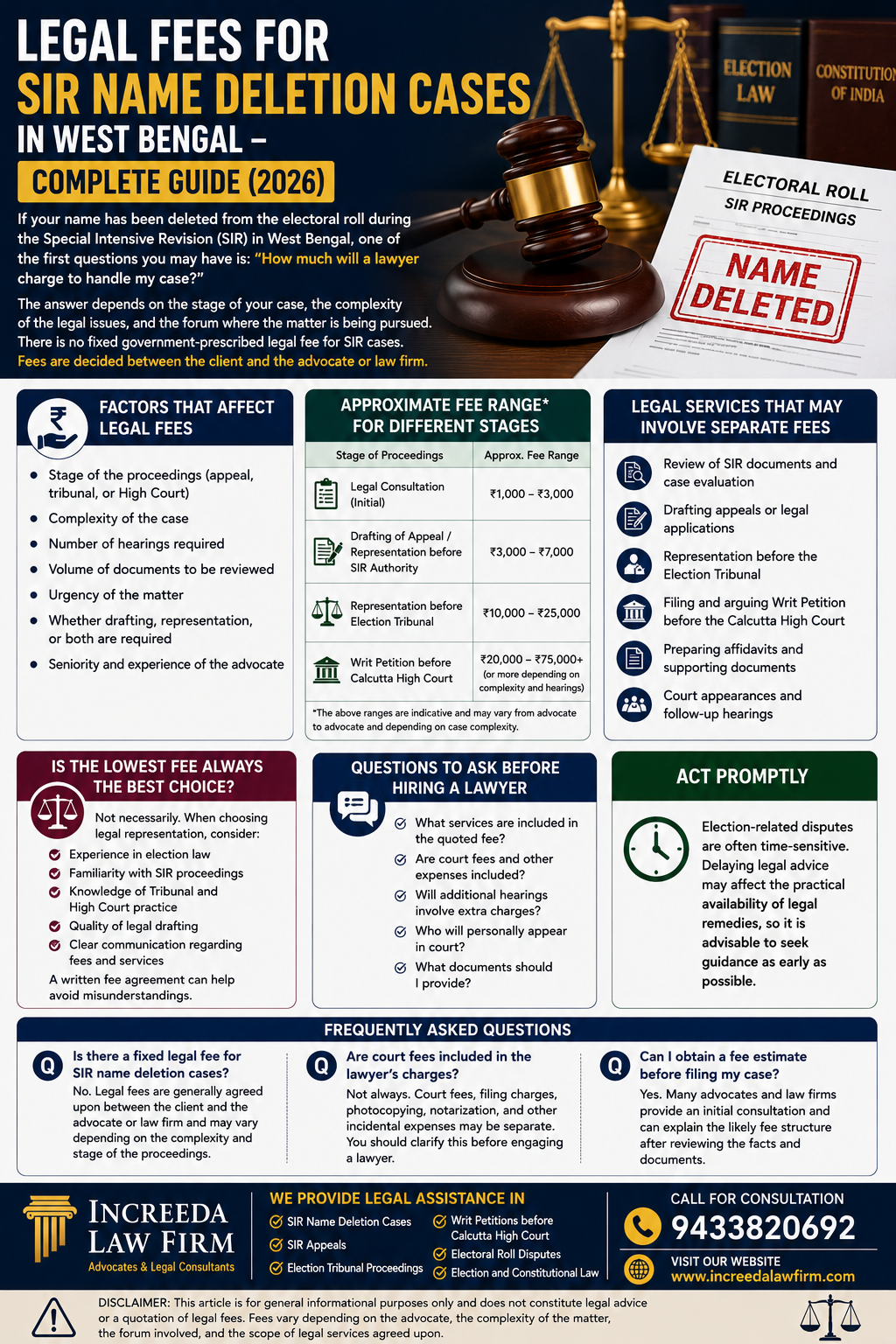
The cost of dealing with an electoral-roll issue arising during a Special Intensive Revision (SIR) in West Bengal cannot be stated as one universal figure. The work required depends on the person’s electoral-roll status, the stage of the revision or challenge, the decision already made, the available records and the legally appropriate forum. A consultation or document review is different from preparing a statutory appeal or pursuing a maintainable proceeding before the Calcutta High Court.
This guide explains how to evaluate a fee quote and how to distinguish an advocate’s professional fee from the total cost of the matter. It does not prescribe an advocate-fee schedule or promise a particular result, duration or total cost.
The Four Main Categories of Cost
1. Court or Statutory Filing Charges
A court, statutory authority or appellate forum may require a filing charge, court fee or another prescribed payment in some proceedings. Whether a charge applies, and its amount, must be checked against the current governing legislation, rules, official schedule and filing procedure for the particular forum. A professional-fee quotation should not be assumed to include these charges unless the engagement expressly says so.
2. Advocate or Professional Fees
Professional fees are agreed for defined legal work. The engagement may cover consultation, review of electoral records, legal research, advice, drafting, filing assistance, an appearance or a specified number of appearances. It may instead cover only one stage. The client should obtain a written description of the work included, the stage covered and the circumstances in which further fees may arise.
3. Incidental Expenses
Incidental expenses may include certified copies, affidavits, notarization, printing, scanning, document binding, process or service expenses, postage and necessary travel. Not every matter requires every item. The engagement should explain whether these expenses are included, paid directly by the client or reimbursed separately against records.
4. Additional Fact-Dependent Costs
Further costs may arise from disputed facts, extensive records, missing evidence, urgent preparation, additional affidavits, repeated hearings, a change of forum, an interlocutory application or proceedings beyond the originally agreed stage. These costs are fact-dependent and should be discussed before additional work is undertaken wherever practicable.
What Affects an Advocate’s Professional Fee?
- Stage of the matter: preliminary advice, a claim or representation, a statutory appeal and a court proceeding involve different work.
- Factual complexity: disputed residence, identity, linkage or prior electoral records may require closer review.
- Condition of the records: incomplete, inconsistent or unorganized documents can increase preparation time.
- Research and drafting: a short representation differs from detailed written submissions, an appeal, a petition or supporting affidavits.
- Hearings and appearances: the number, location and nature of appearances can affect the scope of the engagement.
- Urgency: genuine procedural urgency may require accelerated review and drafting, subject to professional availability and applicable deadlines.
- Forum and further proceedings: work before an electoral authority or statutory appellate forum differs from work before the Calcutta High Court.
Stages of Work That a Fee Quote May Cover
Consultation and Case Assessment
The advocate may examine the current and previous electoral-roll entries, notices, applications, acknowledgement, hearing records, orders and supporting identity or residence documents. The immediate task is to identify the person’s present status and the procedure that may be available. The general electoral-roll revision workflow in West Bengal provides useful background, but individual advice depends on the actual record.
Drafting and Document Preparation
Drafting may involve a claim, correction request, objection, representation, statutory appeal, written submission, petition or affidavit, depending on the applicable procedure. The quote should identify which document is included and whether later replies, supplementary affidavits or additional applications are separate work.
Filing and Procedural Assistance
Filing assistance may cover document checking, compilation, prescribed filing steps and obtaining an acknowledgement or filing reference. It should be clear whether the advocate is responsible for filing, whether the client must complete any personal verification, and whether official or incidental charges are separate.
Hearings and Appearances
An engagement should state whether appearances are included, how many are covered, and what happens if the matter is adjourned or requires additional hearings. It should also clarify whether conferences, written submissions, follow-up advice and obtaining or reviewing the final order fall within the same scope.
Administrative or Statutory Appellate Work Compared with High Court Work
Work before an electoral authority or a statutory appellate forum commonly focuses on the electoral record, the decision under challenge, prescribed procedure and supporting documents. Costs may reflect preparation of the claim or appeal, filing requirements and the number of hearings. The exact authority and appellate route must be identified from the law and framework applicable to the decision; a generic label should not be substituted for that analysis.
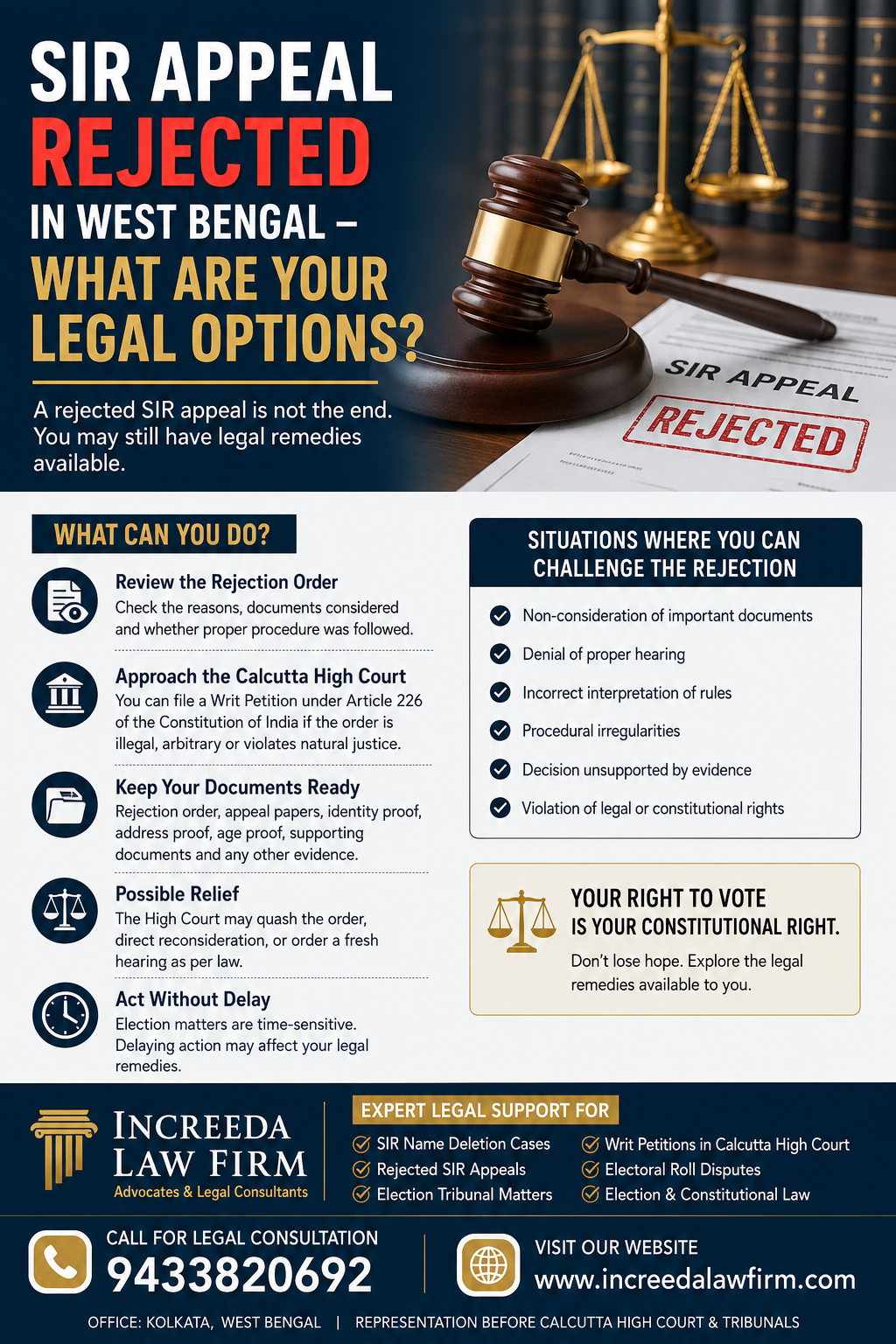
A proceeding before the Calcutta High Court may require a separate maintainability assessment, consideration of available alternative remedies, legal research, preparation of the petition and affidavits, court filing, conferences and appearances. These tasks can involve a broader scope of professional work, but that does not mean a High Court proceeding is automatically necessary or maintainable. The appropriate course depends on the impugned action, procedural history, available statutory remedies, evidence, urgency and legal grounds.
Before considering court proceedings, a person should review the procedural safeguards and qualified remedies during electoral-roll revision. Where the immediate issue is re-inclusion after deletion, the guide to seeking re-inclusion after an SIR deletion explains the distinct restoration context.
Professional Fee Versus the Total Cost of the Matter
A professional-fee quote is not necessarily the total case cost. For example, a quote for drafting and one appearance may exclude official filing charges, certified copies, notarization, travel or later hearings. Conversely, an engagement may bundle some expenses or stages. The written terms, rather than an assumption, should determine what is included.
Scope-of-Work and Engagement Checklist
- What exact problem and procedural stage has the advocate been asked to handle?
- Does the quote cover consultation, research, drafting, filing and appearances, or only selected tasks?
- Which application, appeal, petition, affidavit or written submission is included?
- How many conferences or hearings are included?
- Are adjourned or additional hearings charged separately?
- Are replies, supplementary documents, further applications or proceedings in another forum outside the quoted scope?
- Are court or statutory charges and incidental expenses included or separate?
- Who will maintain filing acknowledgement, expense records and copies of submitted documents?
- When will the client be informed before additional work or expense is incurred?
How to Control Avoidable Costs
- Arrange notices, applications, acknowledgement, electoral-roll extracts and orders chronologically.
- Prepare a short factual timeline and identify gaps without altering original records.
- Keep readable copies while preserving originals safely.
- Provide relevant documents at the beginning instead of in repeated batches where possible.
- Ask which documents are legally relevant before incurring unnecessary certification or copying expense.
- Confirm the scope, hearings and exclusions in writing.
- Choose the procedure supported by the person’s actual status and existing decision rather than assuming that the most formal forum is required.
Clients consulting in Kolkata may also need to consider the location of conferences, filing and appearances, but geography alone does not determine the professional fee. The decisive considerations remain the work required, the applicable procedure and the agreed scope.
Frequently Asked Questions
Is there a fixed advocate fee?
No single advocate fee applies to every SIR-related electoral-roll matter. A fee should be discussed after the relevant facts, documents, procedural stage and requested scope of work have been reviewed.
What can a professional-fee quote include?
Depending on the engagement, it may include consultation, record review, legal research, advice, drafting, filing assistance, conferences, written submissions and specified appearances. The written scope should identify inclusions and exclusions.
Are court or statutory charges included in advocate fees?
Not necessarily. Applicable official charges and incidental expenses may be separate unless the engagement expressly includes them. Any official amount should be verified from the current governing schedule or filing procedure.
Why can High Court proceedings cost more?
They may require a maintainability assessment, wider legal research, preparation of a petition and affidavits, filing formalities, conferences and multiple appearances. The actual difference depends on the case, and High Court proceedings should not be assumed to be the appropriate route in every matter.
How can a client obtain a clearer cost estimate?
Provide the complete available record, explain the procedural history, ask for a defined written scope and confirm how additional hearings, further drafting, official charges and incidental expenses will be handled. An estimate can become more reliable after the advocate identifies the required work, but it should not be treated as a guarantee of the final cost.
RELATED POSTS
View all

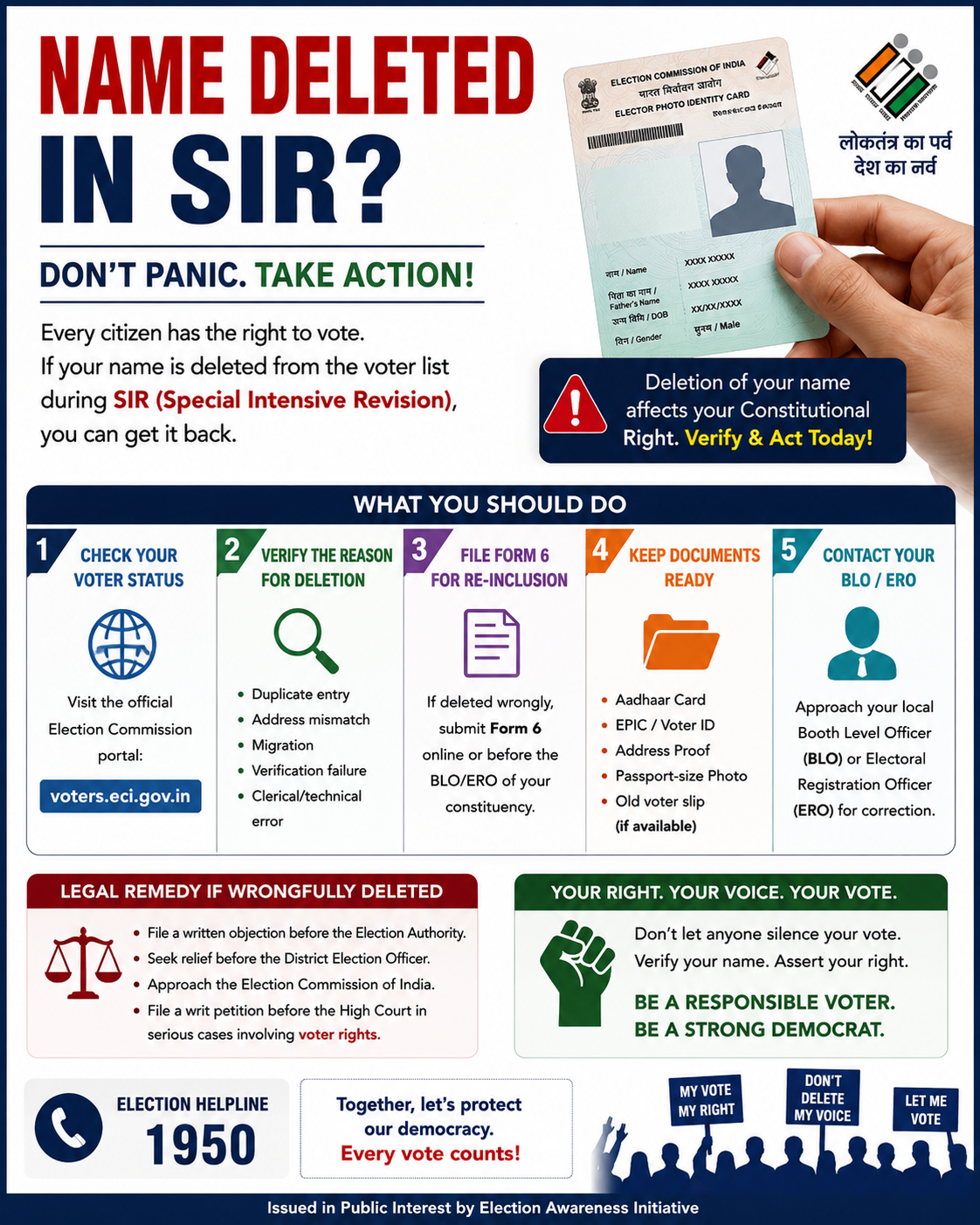
Name Deleted During SIR: Steps to Check and Respond
May 15, 2026 | by Increeda Law Firm

Best Civil Lawyer in Kolkata – Expert Civil Legal Services
February 27, 2026 | by Increeda Law Firm