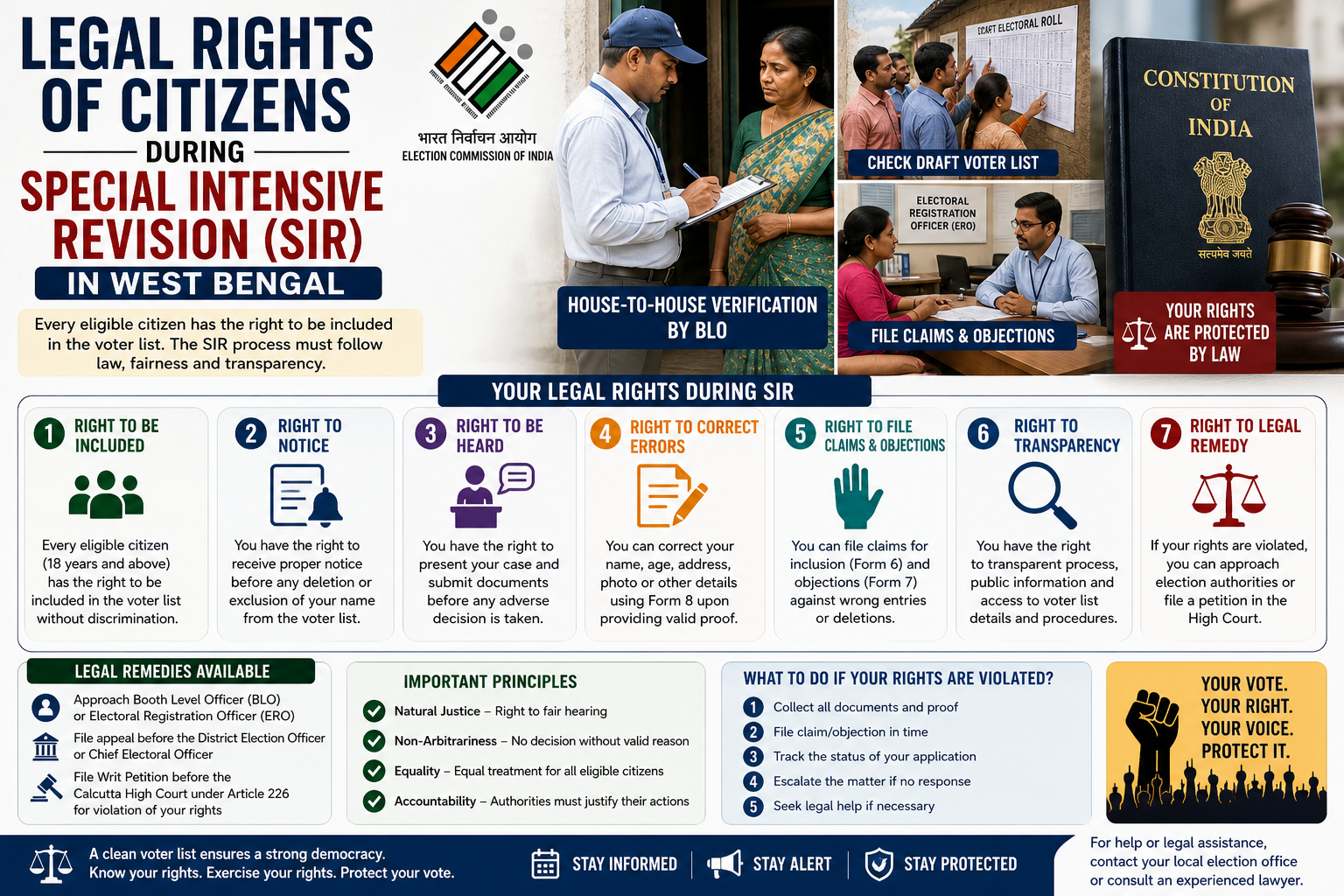
If your name is missing from the electoral roll after a Special Intensive Revision or another revision exercise, the correct response depends on why the entry is missing, the stage of the roll process and whether an authority has already passed an order. This guide explains the general restoration workflow. It does not assume that the same form or remedy applies in every case.
Confirm the Current Electoral-Roll Status
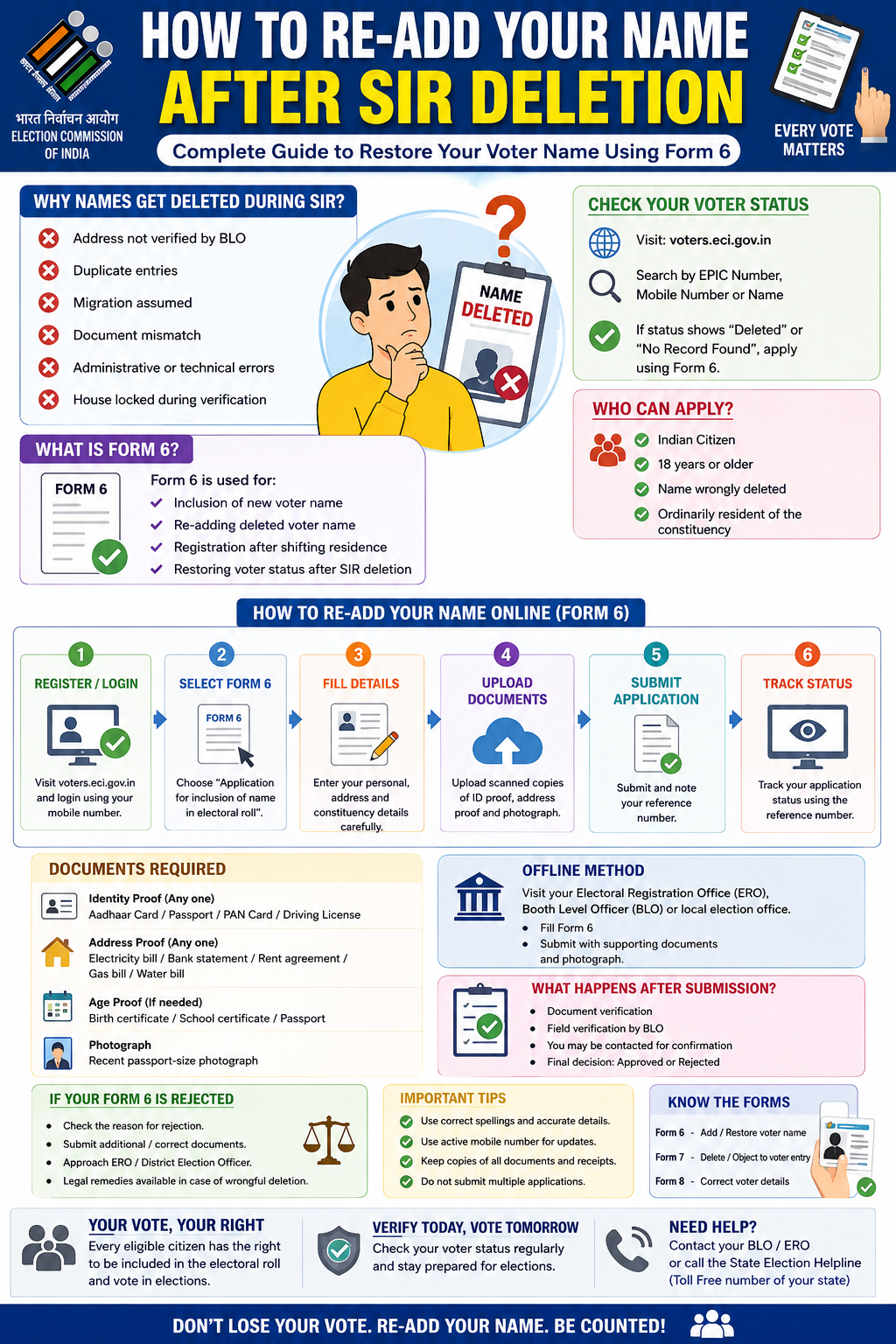
Search the current electoral roll using available voter details and retain a copy or screenshot of the result. Where possible, contact the Booth Level Officer or Electoral Registration Officer and request the recorded reason for omission, deletion or non-inclusion. Common causes may include an address mismatch, duplicate-entry concern, migration assumption, incomplete verification, inconsistent documents, an incorrect deceased or shifted classification, or an administrative or technical error.
Choose the Appropriate Application or Claim
Form 6 is used for new voter registration and inclusion in an electoral roll. Form 7 is used for objection or deletion matters. Form 8 is used for shifting residence, correcting entries in an existing electoral roll, replacing an EPIC, or marking a person as a person with disability. A prior deletion during SIR does not by itself establish that Form 6 is the appropriate procedure; the correct application, representation or statutory remedy depends on the person’s legal and factual status and any decision already made.
For a focused explanation of a formal re-inclusion claim, see the re-inclusion claim guide. For changes to an existing entry, see restoration procedures.
Documents Commonly Useful
- EPIC or voter-ID details and relevant electoral-roll extracts.
- Identity, residence, age or citizenship-related records where relevant and lawfully required.
- The applicable application, claim, objection or appeal and its acknowledgement.
- Deletion, objection, verification, hearing or rejection notices.
- ERO orders, available BLO records and prior correspondence.
Not every document is required in every matter. Use records that address the actual reason for omission or rejection.
Organise the Evidence Before Submission
Arrange the records chronologically and group them by purpose: current and previous electoral-roll entries, identity or residence material, notices, applications, acknowledgements and orders. Label each copy with its source and date, preserve the originals safely, and note any spelling, address or family-linkage inconsistency instead of concealing it. Include records that address the actual reason for omission or rejection rather than submitting an unstructured bundle of unrelated documents.
Submission, Verification and Tracking
Submit through the officially available online or offline channel, keep the acknowledgement and retain an exact copy of everything filed. Attend any verification or hearing and respond within the stated period. Avoid filing multiple inconsistent applications for the same issue without first understanding the status of the earlier filing.
Practical Do-and-Don’t Checklist
- Do preserve the acknowledgement, application number, uploaded files, notices and hearing records.
- Do record the submission date, channel, office and any follow-up communication.
- Do attend scheduled verification or hearings and carry the requested originals where appropriate.
- Do keep an exact copy of every document and representation submitted.
- Do not ignore a notice, deadline or request for clarification.
- Do not submit incomplete or inconsistent applications without first checking the earlier filing.
- Do not rely only on verbal assurances; request or retain a written status or decision where available.
If the Application Is Rejected or Remains Pending
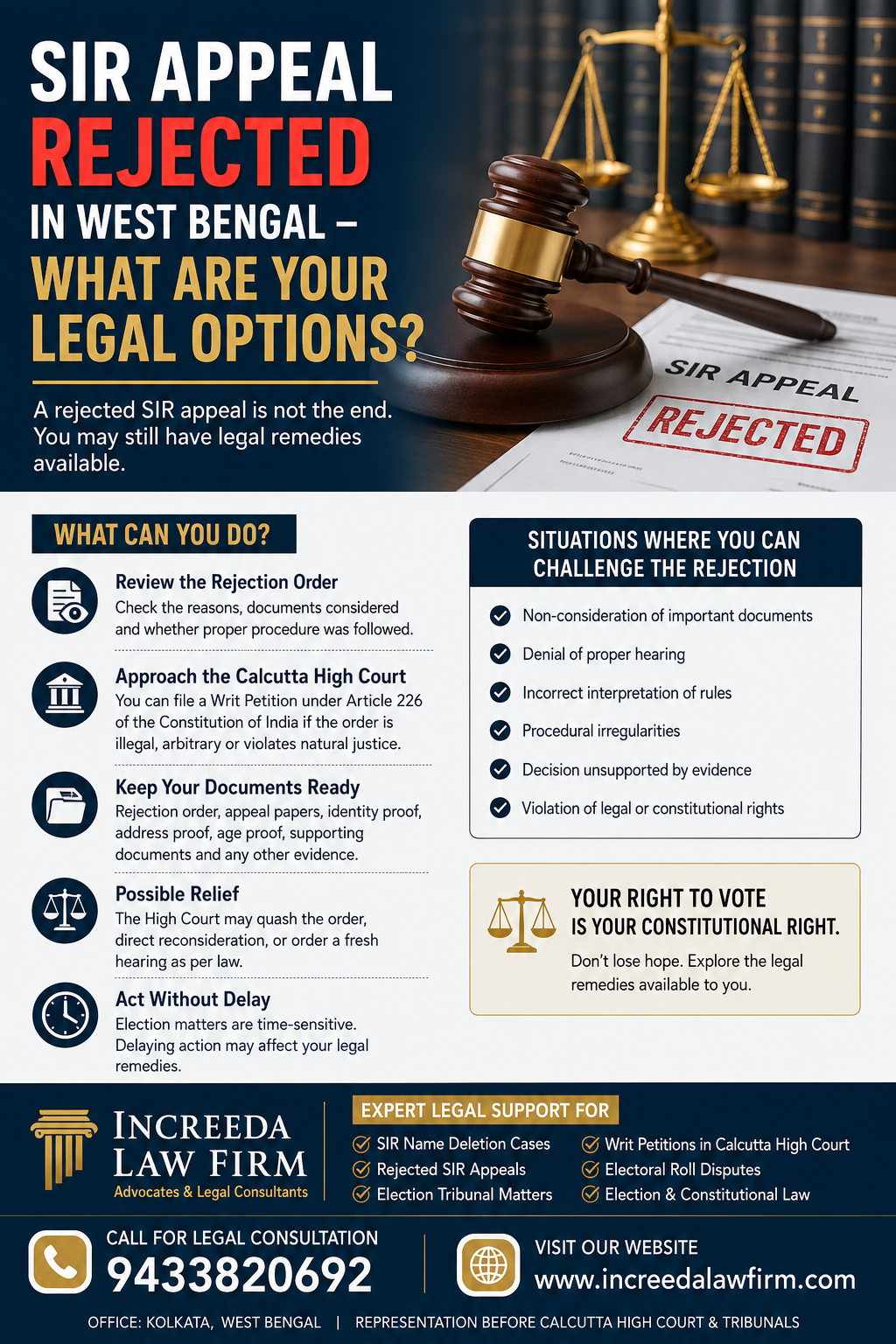
Obtain the written decision or status record and check whether relevant documents were considered and whether an opportunity to respond was provided. Depending on the applicable procedure, the next step may be a representation, fresh application, statutory appeal or another remedy. Court proceedings are not automatic and should be considered only after examining the available statutory route, the order, urgency, procedural fairness and maintainability.
Frequently Asked Questions
Can I vote merely because I still possess an EPIC card?
Possession of a card does not by itself establish that the name appears on the operative electoral roll. Check the current roll.
Is Aadhaar always mandatory?
Document requirements depend on the applicable procedure and current official instructions. Do not assume that one document is universally mandatory.
How long will restoration take?
There is no universal timeline. Timing depends on the revision stage, verification, workload, completeness of the record and any appeal or further proceeding.
Does filing guarantee restoration?
No. The authority decides the matter on the applicable law, procedure, eligibility and evidence.
Official Election Commission Resources
Use the Election Commission of India’s official electoral-roll forms page to review the current Form 6, Form 7 and Form 8 descriptions and instructions. Online voter services are available through the ECI Citizen Service Portal. Check the current official instructions before filing.
Legal Assistance
Increeda Law Firm can review the electoral record, identify the appropriate procedural route and assist with representations, applications, appeals or court proceedings where legally maintainable. Review the firm’s SIR and voter-rights legal services or contact the firm for a case-specific appointment.
Disclaimer: This is general information, not a guarantee of restoration or a substitute for advice on the facts of an individual matter.
RELATED POSTS
View all